Laterite
Laterite Soil in India — Complete GuideIf you have ever seen red-coloured rocky soil in the hills of Rajasthan, Karnataka, or Odisha — that is laterite soil. Farmers, builders, and industries across India use this soil every day. But most people don't fully understand what it is, where it comes from, and how it can be useful for them. In this complete guide, we will explain everything about laterite soil in simple words — from its formation to its use in farming, construction, and industry. And if you need quality laterite directly from the mines, Zillion Sawa Minerals Pvt. Ltd. (ZSM) is here to supply it to you anywhere in India.
What is Laterite Soil?
Definition of Laterite Soil in Simple Words
Laterite soil is a type of soil that forms in hot and wet tropical regions. It is hard, rocky, and mostly red or yellow in colour. This soil is found mainly in areas where there is heavy rainfall for part of the year and intense heat for the rest.
The word "Laterite" comes from the Latin word "Later" which means brick. This is because laterite, when cut and dried, becomes as hard as a brick and has been used in construction for thousands of years.
In simple words — laterite is a hard, iron-rich, reddish soil found in tropical regions of India and the world.
Laterite Soil is Also Known As — Other Names & Terms
Laterite soil is known by different names in different regions of India:
- Brick Soil (because it hardens like a brick when dry)
- Tropical Red Soil (in some regions)
- In local languages it is also called "Murram" or "Moorum" in many parts of India
How is Laterite Soil Formed? (Formation Process)
Laterite soil is formed by a process called leaching. Here is how it happens in simple steps:
- 1. Heavy rain falls on the land during the monsoon season
- 2. The rainwater soaks deep into the ground and washes away useful minerals like calcium, nitrogen, and silica
- 3. What is left behind are iron and aluminum compounds
- 4. The heat of summer bakes this remaining material into a hard, reddish layer
- 5. Over thousands of years, this layer builds up and becomes laterite soil
5. Over thousands of years, this layer builds up and becomes laterite soil
Colour of Laterite Soil why is it Red or Yellow?
Why Laterite Soil is Red in Colour
Laterite soil is a type of soil that forms in hot and wet tropical regions. It is hard, rocky, and mostly red or yellow in colour. This soil is found mainly in areas where there is heavy rainfall for part of the year and intense heat for the rest.
The word "Laterite" comes from the Latin word "Later" which means brick. This is because laterite, when cut and dried, becomes as hard as a brick and has been used in construction for thousands of years.
| Feature | Red Laterite Soil | Yellow Laterite Soil |
|---|---|---|
| Iron Content | High | Moderate |
| Colour | Deep red to brick red | Yellow to pale brown |
| Hardness | Very hard when dry | Slightly softer |
| Where Found | Karnataka, Kerala, Tamil Nadu | Odisha, West Bengal, Assam |
| Best Use | Construction, mining | Agriculture with treatment |
Laterite Soil Images — Visual Identification Guide
If you want to identify laterite soil in the field, look for these signs:
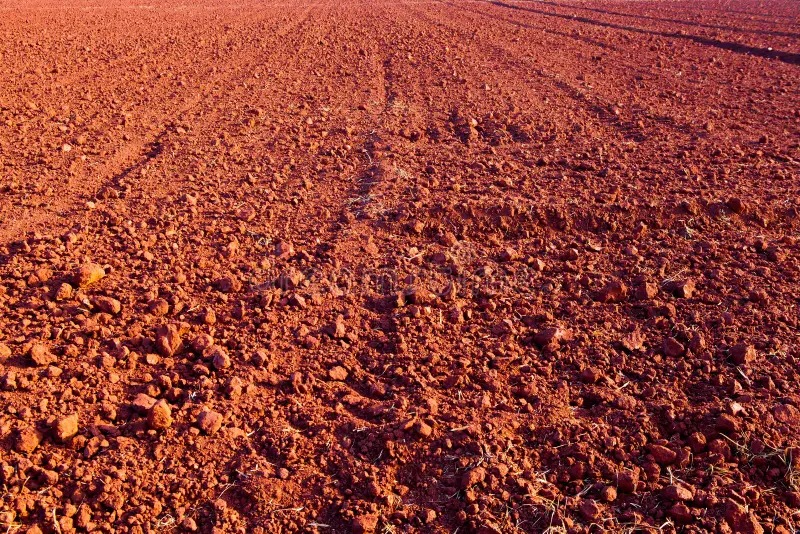
- Colour : Reddish-brown, brick red, or yellowish
- Texture : Grainy and porous when wet, hard and rocky when dry
- Surface : Often forms a hard crust on top
- Appearance after cutting : Shows clear layers — red on top, yellow below, then whitish clay at the bottom
- Common sight : Laterite blocks cut from hillsides used in local construction
Laterite Soil is Rich in Which Minerals? Iron & Aluminium
This is one of the most commonly asked questions about laterite soil — especially in school and college geography exams.
Laterite soil is rich in Iron (Fe) and Aluminium (Al).
These two minerals remain in the soil after the leaching process washes away everything else. This is why laterite soil is also an important source of bauxite (aluminium ore) and iron ore in many parts of India.
Minerals Found in Laterite Soil — Complete List
| Mineral | Chemical Symbol | Amount Present |
|---|---|---|
| Iron Oxide | Fe2O3 | Very High |
| Aluminium Oxide | Al2O3 | High |
| Silica | SiO2 | Low to Moderate |
| Titanium Oxide | TiO2 | Present in small amounts |
| Manganese | Mn | Present in traces |
| Calcium & Magnesium | Ca, Mg | Very Low |
| Nitrogen & Humus | — | Very Low |
What is Lacking in Laterite Soil Nitrogen, Humus & Fertility Facts
While laterite is rich in iron and aluminium, it is poor in the nutrients that crops need most:
- Very low in Nitrogen — which plants need for leaf and stem growth
- Very low in Humus — the organic matter that keeps soil fertile
- Low in Phosphorus and Potassium
- Acidic in nature (pH between 4.5 to 6.0)
This is why raw laterite soil is not naturally very fertile. However, with the right treatment — adding compost, lime, and organic fertilizers — it can be made productive for certain crops.
Laterite Soil vs Black Soil vs Red Soil Mineral Comparison Table
| Feature | Laterite Soil | Black Soil | Red Soil |
|---|---|---|---|
| Rich In | Iron, Aluminium | Calcium, Magnesium | Iron |
| Nitrogen | Very Low | Moderate | Low |
| Water Retention | Low | Very High | Low |
| Fertility | Low (Natural) | High | Moderate |
| Best Crops | Tea, Coffee, Cashew | Cotton, Wheat | Millets, Pulses |
| Found In | Kerala, Karnataka, Odisha | Maharashtra, Madhya Pradesh | Tamil Nadu, Andhra Pradesh |
Laterite Soil in India — States & Distribution Map
Laterite Soil in India — States & Distribution Map
Laterite soil covers a significant part of India mostly in Rajasthan and Karnatka — approximately 1.26 lakh square kilometers of the country's land area. It is mostly found in the peninsular plateau and coastal regions.
Most people think laterite soil is only found in South India — Kerala, Karnataka, Goa. That is a common misunderstanding. Laterite deposits are spread across multiple regions of India, and one of the most significant and least talked about deposits is right here in Rajasthan. Laterite soil covers approximately 1.26 lakh square kilometers of India's land area, and while South and East India get most of the attention, Rajasthan's deposits are quietly proving themselves as some of the best quality laterite available — especially for buyers in North and Central India.
Rajasthan Laterite — The Hidden Gem Nobody Talks About
For decades, the laterite story in India has been dominated by South Indian states. Kerala, Karnataka, Odisha, Goa — these names come up in every textbook and every supplier list. But here is what nobody tells North Indian farmers and builders: by the time that South Indian laterite reaches you in Rajasthan, Uttar Pradesh, Madhya Pradesh, Gujarat, or Haryana — it has already travelled 1,500 to 2,500 kilometres. You are not just paying for the material. You are paying for the truck, the fuel, the middlemen, and the waiting time. Delivery can take anywhere from 7 to 15 days, and visiting the supplier's mine yourself is simply not practical.
Rajasthan has well-established laterite deposits in the Hadoti and Vindhyan plateau belt that have largely remained underutilised compared to their South Indian counterparts. The laterite found here is hard, iron-rich, reddish in colour, and perfectly suitable for agricultural, construction, and industrial use. The quality matches South Indian laterite — but the location changes everything for North Indian buyers.
Why North Indian Farmers Are Choosing Rajasthan Laterite
If you are a farmer or builder based anywhere in North, Central, or West India — Rajasthan laterite is simply the smarter choice. The freight cost alone can be reduced by 40 to 60 percent compared to sourcing from South India. Delivery that used to take two weeks now takes one to three days. And instead of dealing with a broker who has never seen the mine, you can deal directly with the source.
This is exactly where Zillion Sawa Minerals Pvt. Ltd. (ZSM) comes in. ZSM operates directly from laterite deposits in Rajasthan. We are not traders, not brokers, and not middlemen. We are the mine. When you place an order with ZSM, the laterite moves directly from our deposit to your location — no unnecessary stops, no inflated pricing, no quality surprises. Every batch comes from the same consistent deposit, so what you receive today is the same quality you will receive six months from now.
ZSM — Rajasthan's Trusted Laterite Source for North India
Zillion Sawa Minerals has built its reputation on one simple promise — quality laterite, direct from Rajasthan, at a price that makes sense for North Indian buyers. Whether you need laterite for soil improvement on your farm, sub-base material for road construction, or bulk industrial supply — ZSM has the grade, the quantity, and the logistics network to deliver it to your door.
Quality laterite, direct from Rajasthan, at a price that makes sense for North Indian buyers.
Which Crops Grow Best in Laterite Soil?
Even though laterite soil is low in natural fertility, it supports several important crops — especially those that prefer acidic, well-drained soil. With proper soil treatment, laterite land can be made productive for a wide range of crops.
Crops that grow well in laterite soil:
Tea
Coffee
Cashew
Rubber
Coconut
Pineapple
Tapioca (Cassava)
Ragi (Finger Millet)
Groundnut
Rice (with irrigation)
Tea, Coffee, Cashew & Rubber — Why They Prefer Laterite
These four crops are the most successful on laterite soil and here is the simple reason why:
Tea and Coffee prefer slightly acidic soil with good drainage — exactly what laterite provides. The well-draining nature of laterite prevents waterlogging, which would rot the roots of these plants.
Cashew is a hardy crop that actually thrives in poor, acidic soils. It does not need much nitrogen and can grow well on laterite hillsides where other crops fail. This is why Kerala and Goa — two of India's biggest cashew producers — both sit on laterite land.
Rubber needs deep, well-drained soil with good moisture retention. The porous structure of laterite, when combined with organic matter, works very well for rubber plantations.
How Farmers Can Improve Laterite Soil for Better Yield
If you are a farmer with laterite soil on your land, here is a simple treatment plan to improve its fertility:
- Add lime — to reduce acidity (apply 1–2 tonnes per acre depending on pH test)
- Add compost or farmyard manure — to increase humus and nitrogen levels
- Use green manure crops like dhaincha or sunhemp before the main crop
- Apply fertilisers rich in Nitrogen and Phosphorus
- Practice contour farming on slopes to prevent soil erosion
- Mulching — cover the soil surface to retain moisture
With these steps, even laterite land can give good yields of cashew, coconut, tapioca, and millets.
Is Laterite Soil Good for Vegetable Farming?
Raw laterite is not ideal for vegetable farming due to its low fertility and acidic nature. However, after proper treatment with organic compost, lime, and fertilisers, small-scale vegetable farming is possible in laterite areas.
Vegetables like bitter gourd, drumstick, and cowpea show reasonable results in treated laterite soil. For commercial vegetable farming, heavy soil improvement is required before planting.
Uses of Laterite Soil Beyond Farming — Construction & Industry
Laterite as a Building Material — Ancient & Modern Use
Laterite has been used as a building material for over 1,000 years in India. Some of the most famous ancient temples and structures in South India and Southeast Asia were built using laterite blocks.
When laterite is freshly cut, it is soft enough to shape with tools. But once it dries and is exposed to air, it hardens like a brick and becomes very durable. This makes it an excellent natural building material.
Today, laterite is widely used for:
- Wall construction in rural South India and Goa
- Flooring in traditional homes
- Garden and landscape borders
- Heritage and eco-friendly construction
Laterite in Road Construction & Infrastructure
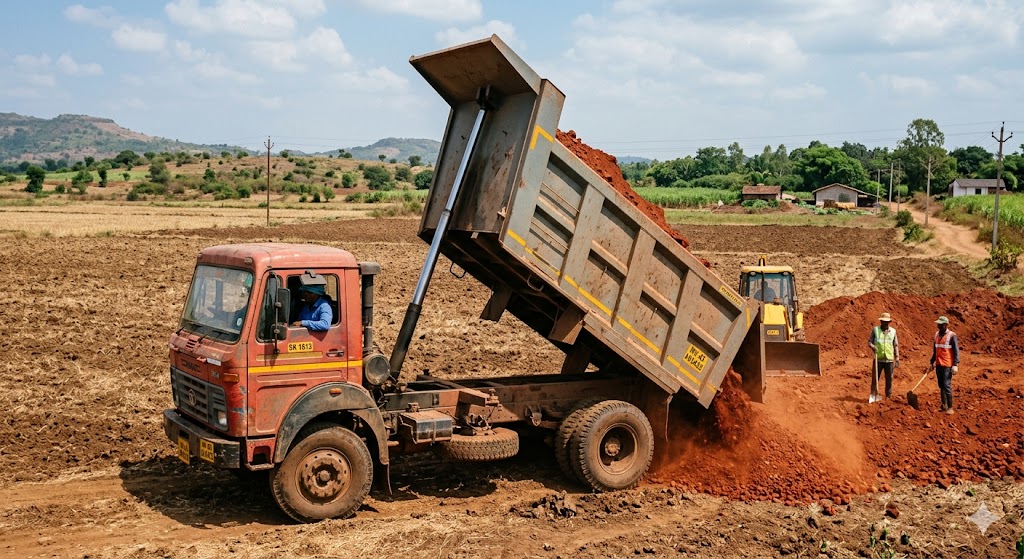
Laterite is one of the most commonly used materials in road construction in India, especially in South and East India. It is used as:
- Sub-base material under roads and highways
- Filling material for embankments
- Surface material for rural and forest roads
- Drainage base in construction projects
Its hard, stable nature when compacted makes it ideal for bearing heavy loads in road construction.
Industrial Uses of Laterite Ore in India
At the industrial level, laterite is a significant ore for:
- Bauxite extraction — used to produce aluminium
- Nickel and cobalt mining — in high-grade laterite deposits
- Iron ore production — especially in Odisha and Jharkhand
- Cement industry — used as a raw material
India is one of the world's largest producers of laterite-based minerals, and the demand from the steel, aluminium, and construction industries continues to grow every year.
Buy Laterite Soil in India — Zillion Sawa Minerals Pvt. Ltd. (ZSM)
Why Choose Zillion Sawa as Your Laterite Supplier?
Whether you are a farmer looking to understand your soil, a builder sourcing construction material, or an industry buyer procuring laterite ore in bulk — Zillion Sawa Minerals Pvt. Ltd. (ZSM) is India's trusted name for quality laterite supply direct from mines.
Here is why hundreds of buyers across India trust ZSM:
- Direct from Mines — No middlemen, no inflated prices
- Consistent Quality — Every batch is checked for grade and purity
- Multiple Grades Available — Agricultural, construction, and industrial grade
- Pan-India Delivery — We supply to all major states
- Bulk Order Capability — From small farm quantities to large industrial loads
- Experienced Team — Years of expertise in laterite sourcing and supply
- Transparent Pricing — What you see is what you pay
Grades of Laterite We Supply — Quality Standards
ZSM supplies laterite in three primary grades to meet different buyer needs
| Grade | Best For | Key Feature |
|---|---|---|
| Agricultural Grade | Farmers, soil improvement, landscaping | Screened, sized for easy use |
| Construction Grade | Road sub-base, filling, rural roads | Hard, compacted, load-bearing |
| Industrial Grade | Ore processing, bauxite, manufacturing | High iron/aluminium content |
Pan-India Delivery — States We Cover
ZSM currently supplies laterite to buyers across India including Maharashtra, Gujarat, Rajasthan, Madhya Pradesh, Uttar Pradesh, Delhi NCR, West Bengal, Andhra Pradesh, Telangana, Tamil Nadu, Karnataka, Kerala, and Odisha.
If you are located in any other state, contact us — we will find the best logistics solution for your requirement.
How to Place a Bulk Order — Contact & WhatsApp
Placing an order with ZSM is simple:
- Tell us your requirement — Grade, quantity, and delivery location
- Get a quote — We will send you a competitive price within 24 hours
- Confirm and pay — Simple payment process
- We deliver — Direct from our mines to your site
- Call or WhatsApp : (+91) 83021 84095
- Email : info@zillionsawaminerals.com
- Website : https://zillionsawaminerals.com/
Frequently Asked Questions (FAQ)
Laterite soil is also known as brick soil, tropical red soil, and laterite mitti (in Hindi). Locally it is often called Murram or Moorum.
Naturally, laterite soil has low fertility. But with the addition of compost, lime, and fertilisers, it can be made productive for crops like cashew, tea, coffee, and coconut.
Laterite soil is typically red to reddish-brown in colour due to high iron oxide content. It can also appear yellowish in areas with lower iron content.
Zillion Sawa Minerals Pvt. Ltd. (ZSM) supplies quality laterite directly from mines across India. Contact us for agricultural, construction, or industrial grade laterite at competitive prices.
Tea, coffee, cashew, rubber, coconut, pineapple, and ragi grow well in laterite soil. With soil treatment, vegetables and rice can also be cultivated.